Part 4 of a 4-part series on plastic.
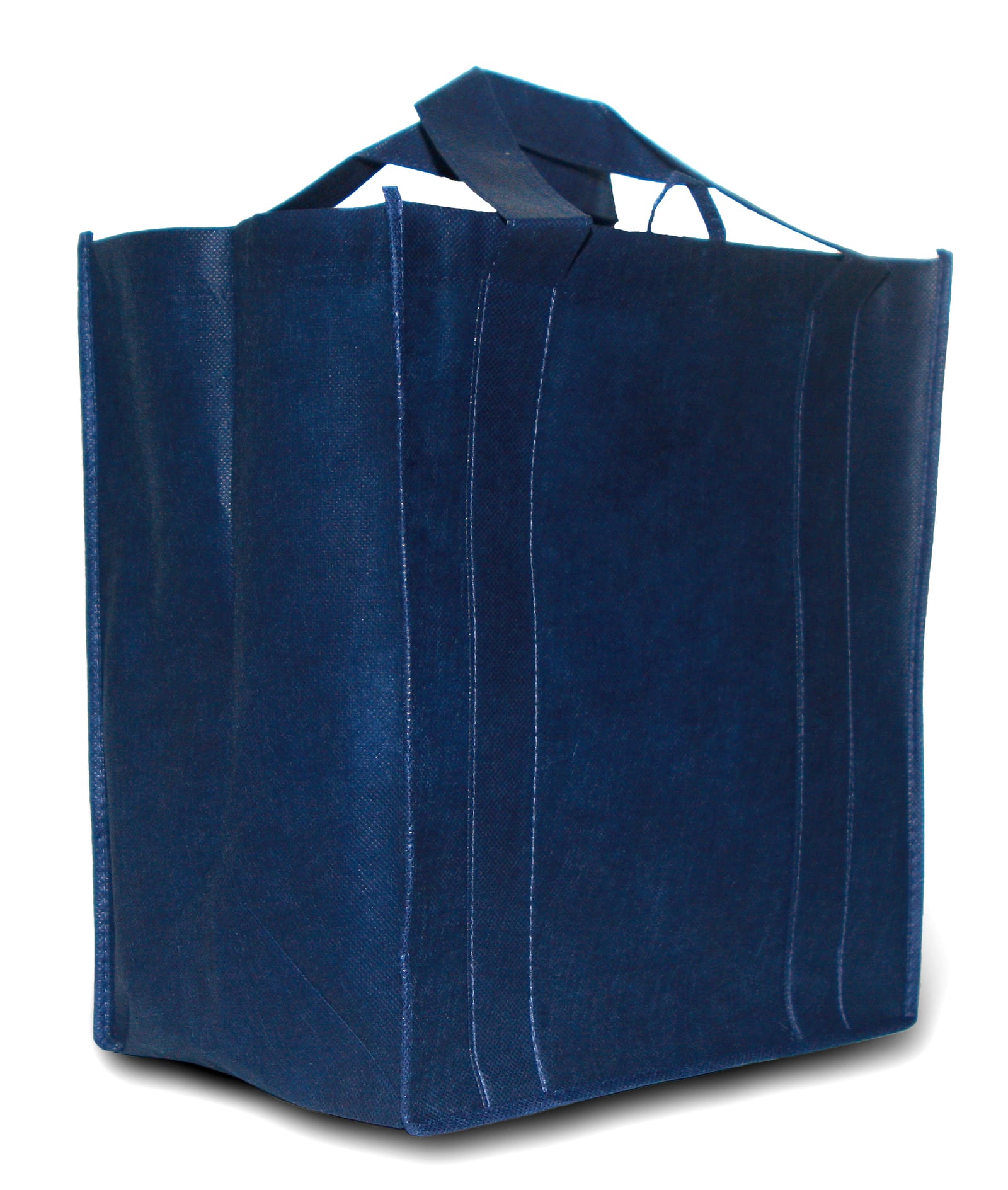
At the grocery checkout, there is a certain quiet satisfaction in producing your own tote bag. It is a small, legible act — the kind that feels like it should count for something. It does count. But before it counts in your favor, the bag has to repay its own production debt. Most people have never run that number.
The figure “7,100 uses” circulates widely online. It is real. But what it measures — and how it differs from the number you get when you only ask about climate change — is almost never explained alongside it. This article puts both numbers on the table and shows exactly what the calculation is actually saying.
INPUT
Variable 1: Cotton tote bag production footprint
LCA (Life Cycle Assessment — a method that accounts for the total environmental burden of a product from production through disposal) results vary considerably across studies. The main sources of variation are cotton origin, whether it is organically grown, irrigation method at the growing site, and differences in functional unit definition (size, weight).
This article uses two reference values.
Reference A — UK Environment Agency 2011[1] (GWP basis, primary value)
The UK Environment Agency’s 2011 report Life Cycle Assessment of Supermarket Carrier Bags is the benchmark study comparing cotton tote bags and HDPE plastic bags on a single GWP (Global Warming Potential, kgCO₂e) metric. The report finds that a cotton tote bag has a production footprint 131 times larger than an HDPE plastic bag on a GWP basis.[1] Working backwards, the absolute footprint of a cotton tote bag is approximately kgCO₂e. This is the GWP-only central estimate and is a conservative figure.
Reference B — Danish Environmental Protection Agency LCA 2018[2] (worst-case across all indicators, for sensitivity)
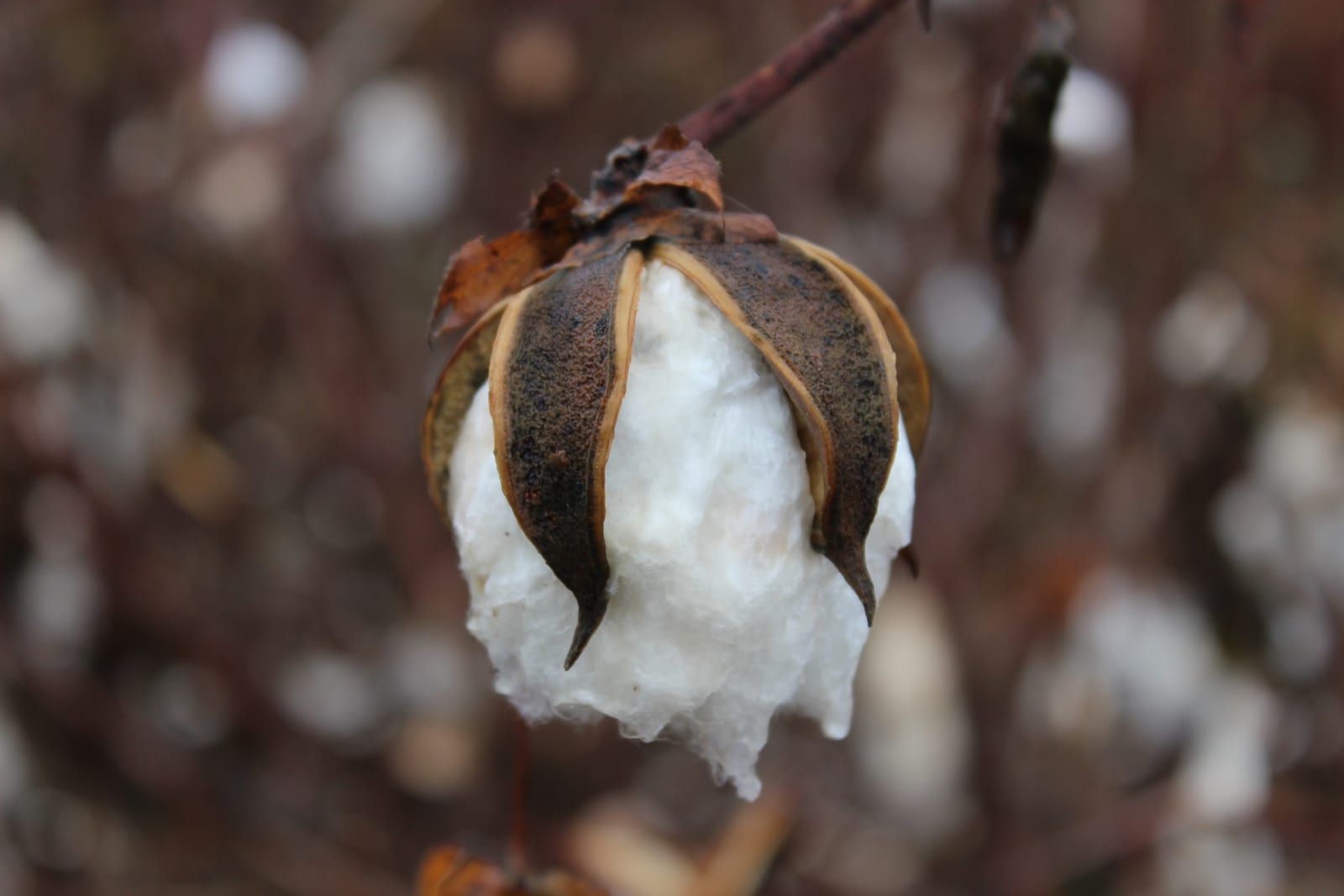
The Danish EPA (Miljøstyrelsen) conducted an ISO 14040/14044-compliant LCA in 2018 comparing seven bag materials — including LDPE, PP, cotton, and organic cotton — across 15 environmental indicators.[2] The “7,100 uses” figure from this study is not a GWP figure. Precisely: it is the break-even number of uses for the single worst-performing indicator across all 15 environmental metrics, which is ozone depletion potential (ODP).[2] Certain pesticides and chemicals used in cotton cultivation push the ODP indicator extremely high relative to plastic bags.
| Indicator | Standard cotton tote break-even | Organic cotton tote |
|---|---|---|
| GWP (climate change only) | 52 uses | 149 uses |
| Worst across all indicators (ODP-dominated) | 7,100 uses | 20,000 uses |
In the Danish LCA, looking at GWP alone, break-even is 52 uses. The 7,100-use figure spread widely online because the study drew its headline conclusion from the most demanding indicator — the one that includes ozone layer impact.[2]
This article takes GWP as its primary axis, using the UK EA 2011 reference (GWP break-even 131 uses / kgCO₂e) as the main scenario and the Danish 2018 results (GWP 52 uses / all-indicators worst-case 7,100 uses) as the sensitivity comparison.
Variable 2: HDPE plastic bag production footprint per bag
UK EA 2011 functional unit: one supermarket HDPE plastic bag (approximately 6–7 g).[1] This value is well-supported across studies. The petrochemical processes that produce HDPE are relatively well-characterized in terms of carbon intensity.
Variable 3: One tote use = one plastic bag substituted
We assume each tote bag use substitutes exactly one plastic bag (1:1 substitution). UK EA 2011 uses the same assumption.[1] This is conservative — in practice, a single tote often replaces two or three plastic bags per trip, which would make the break-even faster.
Variable 4: Tote bag real-world service life
Survey data commissioned by the UK Environment Agency puts the average actual number of uses for a cotton tote bag at approximately 51 uses.[3] WRAP (Waste and Resources Action Programme) consumer behavior research indicates a range of 52–104 uses.[3] These are survey-based estimates and carry meaningful uncertainty (needs-assumption). The real-world distribution is wide: a minority of committed users skew the average upward, while many bags get used a handful of times.
| Scenario | Actual uses | Basis |
|---|---|---|
| Conservative | 52 uses | UK EA commissioned survey, lower bound |
| Central | 104 uses | WRAP UK survey midpoint |
| Optimistic | 200 uses | Upper-end long-term user estimate |
Variable 5: Global plastic production and growth rate
- million tonnes/year (2019 baseline, OECD Global Plastics Outlook 2022)[4]
- OECD BAU scenario: 460 Mt in 2019 → 1,231 Mt by 2060 (roughly 2.5× in 41 years)[4]
- Baseline growth rate used here: /year (Geyer et al. 2017[5] 2000s trend central estimate; intermediate scenario)
- Policy reduction rate (baseline): /year (modest policy intervention scenario; needs-assumption)
Variable 6: Plastic production carbon intensity
Global full-lifecycle greenhouse gas emissions from plastic production were approximately 2.24 GtCO₂e in 2019.[6] Against the same year’s production volume of 460 Mt:
This is an average across all plastic types and carries ±30% uncertainty.
FORMULA
Step 1: GWP break-even number of uses
The break-even point is the moment when the tote bag’s accumulated carbon savings from substituting plastic bags cancel out the carbon debt incurred during its production.
Checking units: numerator and denominator are both kgCO₂e, so the ratio is dimensionless.
UK EA 2011 (GWP only):
Danish LCA 2018 — GWP only (figure from the study directly):
Danish LCA 2018 — worst-case across all indicators including ODP (figure from the study directly):
Same bag. Same study. Different indicator. The break-even ranges from 52 to 7,100 uses — a factor of roughly 136.5× depending on what you are measuring.
Step 2: Time to break-even
With uses per week, the time to break-even is:
| Reference | Break-even uses | At 1 use/week |
|---|---|---|
| UK EA GWP | 131 uses | years |
| Danish GWP | 52 uses | year |
| Danish all-indicators worst (ODP) | 7,100 uses | years |
On a GWP basis alone, a tote used once a week can reach break-even within one to two and a half years.
Step 3: Reversal 1 — Real-world service life vs. break-even
| Reference / Scenario | Break-even | Conservative (52 uses) | Central (104 uses) | Optimistic (200 uses) |
|---|---|---|---|---|
| UK EA GWP | 131 uses | Short | Short | Achieved |
| Danish GWP | 52 uses | Borderline | Achieved | Achieved |
| Danish all-indicators worst (ODP) | 7,100 uses | Short | Short | Short |
If survey averages put actual use at around 52 times, then even on the more forgiving Danish GWP standard (52 uses), many tote bags end their lives right at the break-even threshold — and a significant share never crosses the UK EA threshold of 131 uses. A bag discarded just before break-even has not recovered the environmental cost of its manufacture. Good intentions, reversed at the finish line.
GWP break-even comparison with alternative bag types:[2]
| Bag type | GWP break-even | Realistically achievable? |
|---|---|---|
| Cotton tote (UK EA GWP) | 131 uses | Possible for committed long-term users |
| Cotton tote (Danish GWP) | 52 uses | Achievable for most users |
| LDPE reusable bag | 3–4 uses | Very easy |
| PP non-woven bag | 11–37 uses | Easy |
| Organic cotton tote (Danish GWP) | 149 uses | Difficult |
LDPE reusable bags and PP non-woven bags — materials not generally marketed as “eco-friendly” — cross their GWP break-even point after just 3 to 37 uses.
Step 4: Multi-indicator comparison
Beyond GWP, cotton tote bags are disadvantaged across several other indicators.[2]
| Environmental indicator | Why the cotton tote scores poorly |
|---|---|
| GWP (climate change) | Energy-intensive cotton farming, spinning, and dyeing |
| Ozone depletion (ODP) | Specific pesticides used in cotton cultivation — the indicator that produces the 7,100-use figure |
| Freshwater consumption | Cotton requires approximately 10,000–20,000 liters of water per kilogram grown[7] |
| Land use | Cotton field area vs. synthetic fiber production area |
A GWP break-even of 52–131 uses does not mean the bag is environmentally clean on all dimensions. Factor in freshwater and land use and the picture gets considerably more complicated. “Eco-friendly” is not a single number — it is a choice of which indicator to prioritize.
Step 5: Reversal 2 — Dynamic global production model
Here we compare the carbon savings from one person’s tote bag against the annual increase in global plastic production.
Individual annual reduction :
Substituting at 1 use per week :
Unit check: — consistent.
Carbon equivalent of the annual increment in global plastic production :
Unit check: — consistent.
The ratio:
The annual carbon increment from growth in global plastic production is roughly 89 billion times larger than one person’s annual savings from carrying a tote bag. The most sensitive variable in this calculation is plastic production carbon intensity . Halving that estimate still leaves the ratio at 44.5 billion — the order of magnitude does not change.
Dynamic model for global production after years:
where is the annual reduction rate from policy intervention. If , production keeps rising; if , it stabilizes; if , it declines.
Substituting baseline values: , , , years:
Computing : , and , so :
The OECD BAU scenario projects 1,231 Mt by 2060.[4] The IEA and CIEL warn that plastic-related emissions could consume 10–13% of the entire global carbon budget by 2050.[6]
Net-effect conclusion: For an individual’s effort to register on the global trajectory, must exceed — policy reduction must outpace production growth. A single tote bag cannot move the decimal point on .
OUTPUT
On a GWP (climate change) basis alone, the cotton tote bag break-even sits at 52–131 uses. Used once a week, that is achievable within one to two and a half years. Measured against the survey average of 51–52 real-world uses, most tote bags are landing right on the line — and many, statistically, are being discarded just before crossing it.
The tote bag became a cultural fixture in the UK partly because of policy: the 5p single-use plastic bag charge introduced in England in 2015 sent supermarket plastic bag sales falling by over 95 percent within a year, and the reusable bag — cotton or otherwise — filled the gap.[12] A similar dynamic played out across the US as California (2014), New York (2020), and eventually most states moved to restrict or charge for single-use bags. Both shifts were driven by GWP-adjacent thinking: reduce the visible plastic, feel the benefit. The LCA literature reviewed here suggests the picture is more complicated than either policy framing acknowledged. The bag is not the problem; the bag is the most photogenic corner of the problem.
The widely cited “7,100 uses” comes from the Danish EPA’s 2018 LCA. It is the break-even for ozone depletion potential — the single most demanding of 15 environmental indicators — not for climate change. That distinction matters: GWP and ODP are different problems with different drivers. The 7,100-use figure is not wrong. It is just answering a different question than the one most people think they are asking.
The dynamic model delivers the colder verdict. One person switching to a tote bag saves roughly 0.879 kgCO₂e per year. The annual carbon increment from global plastic production growth is approximately 7.84 × 10¹⁰ kgCO₂e. The tote bag is not a fraud. It is a genuinely small instrument applied to a genuinely large problem. The bag’s failure is not that it is un-green — it is that it tends to be discarded before turning green, and that even when it does, the aggregate effect is invisible at the scale where it would need to register. Moving the slider past the value on that dynamic model is not a shopping decision.


References
[1]: UK Environment Agency, “Life Cycle Assessment of Supermarket Carrier Bags: A Review of the Bags Available in 2006,” February 2011. https://assets.publishing.service.gov.uk/media/5a7bff74ed915d01ba1ca7c7/scho0711buan-e-e.pdf — GWP break-even for cotton tote bag: 131 uses; HDPE plastic bag footprint: 0.0169 kgCO₂e/bag; cotton tote back-calculated footprint: ~2.21 kgCO₂e.
[2]: Danish Environmental Protection Agency (Miljøstyrelsen), “Life Cycle Assessment of grocery carrier bags,” Environmental Project No. 1985, 2018. https://www2.mst.dk/udgiv/publications/2018/02/978-87-93614-73-4.pdf — GWP break-even: standard cotton 52 uses, organic cotton 149 uses; worst-case across all 15 indicators (ODP-dominated): standard cotton 7,100 uses, organic cotton 20,000 uses. ISO 14040/14044 compliant.
[3]: UK Environment Agency commissioned survey; average actual cotton tote uses: 51. Cited within UK EA (2011)[1] and WRAP (Waste and Resources Action Programme) consumer behavior data. https://assets.publishing.service.gov.uk/media/5a7bff74ed915d01ba1ca7c7/scho0711buan-e-e.pdf
[4]: OECD, “Global Plastics Outlook: Policy Scenarios to 2060,” June 2022. https://www.oecd.org/en/publications/global-plastics-outlook_de747aef-en.html — Global plastic production 2019: 460 Mt; BAU scenario 2060: 1,231 Mt.
[5]: Geyer, R., Jambeck, J. R., & Law, K. L., “Production, use, and fate of all plastics ever made,” Science Advances, 3(7), e1700782, 2017. https://www.science.org/doi/10.1126/sciadv.1700782 — Global plastic production time series; average annual growth rate data for the 2000s.
[6]: Center for International Environmental Law (CIEL), “Plastic & Climate: The Hidden Costs of a Plastic Planet,” 2019. https://www.ciel.org/project-update/plastic-climate-the-hidden-costs-of-a-plastic-planet/ — Global full-lifecycle plastic production emissions: 2.24 GtCO₂e (2019); projected to consume 10–13% of the global carbon budget by 2050.
[7]: WWF, “Cotton Farming,” estimated water consumption for 1 kg of cotton: approximately 10,000–20,000 liters. https://www.worldwildlife.org/industries/cotton — Basis for the freshwater indicator disadvantage of cotton tote bags.
[8]: UNEP, “Turning off the Tap: How the world can end plastic pollution and create a circular economy,” 2023. https://www.unep.org/resources/turning-off-tap-end-plastic-pollution-create-circular-economy — Global plastic pollution status; annual production ~430 Mt (2023 basis); reduction roadmap.
[9]: Our World in Data, “Global plastics production,” based on Geyer et al. 2017. https://ourworldindata.org/grapher/global-plastics-production — Global plastic production time series since 1950; annual growth rate reference.
[10]: ISO 14040:2006 / ISO 14044:2006, “Environmental management — Life cycle assessment — Principles and framework / Requirements and guidelines.” The international standard underpinning the Danish EPA 2018 LCA[2]; methodological basis for functional unit definition, system boundaries, and indicator selection.
[11]: EEA (European Environment Agency), “GHG emissions from EU’s plastics value chain,” 2022. https://www.eea.europa.eu/en/circularity/sectoral-modules/plastics/ghg-emissions-from-eus-plastics-value-chain — EU plastics value chain carbon emission structure; cross-validation reference for carbon intensity estimate .
[12]: UK Department for Environment, Food and Rural Affairs (Defra), “Carrier bag charge: usage in the main supermarkets in England,” statistical release, 2016. https://www.gov.uk/government/statistical-data-sets/env0801-carrier-bags — Single-use plastic bag usage in the seven largest English supermarket chains fell from approximately 7.6 billion bags (2014) to 0.6 billion bags (2015/16) following the 5p charge introduction; basis for the >95% reduction figure cited.