Gas, Diesel, Hybrid, or EV — Which Is Cheapest Over 5 Years? At 7, the Answer Flips
If you’ve ever asked a dealer for quotes on the same SUV in three different powertrains, you’ve seen it: the gasoline trim, the diesel trim, the hybrid trim, and the electric trim all land on wildly different sticker prices. Nowhere on any of those quotes, though, does it say “total cost after five years.” Most buyers make the call off that one number on the contract and move on.
This article calculates the five (or seven) years that number hides. Start with the purchase price, subtract subsidies and tax breaks, add up everything that leaves your wallet every year — fuel, registration tax, insurance, maintenance — and then subtract back out whatever you’ll recover when you sell the car used. That sum is the total cost of ownership (TCO — everything you pay from purchase to disposal, net of what you get back). Spoiler: the ranking doesn’t flip once. It flips twice. And there’s already one twist baked into the vehicle lineup itself — the diesel Tucson this article compares stopped being sold as of the 2026 model year. Twenty-two years of diesel Tucsons, gone.[2]
(All USD figures in this article use an approximate conversion of ~1,380 KRW/USD, the mid-2026 rate — treat them as a ballpark, not a live quote. Korean won stays the primary currency throughout, since every input — subsidy amounts, tax brackets, fuel prices — is a Korean policy number first.)
This article is a for-fun calculation, not legal, tax, or medical advice. Consult a qualified professional before making real decisions.
INPUT
The vehicle lineup
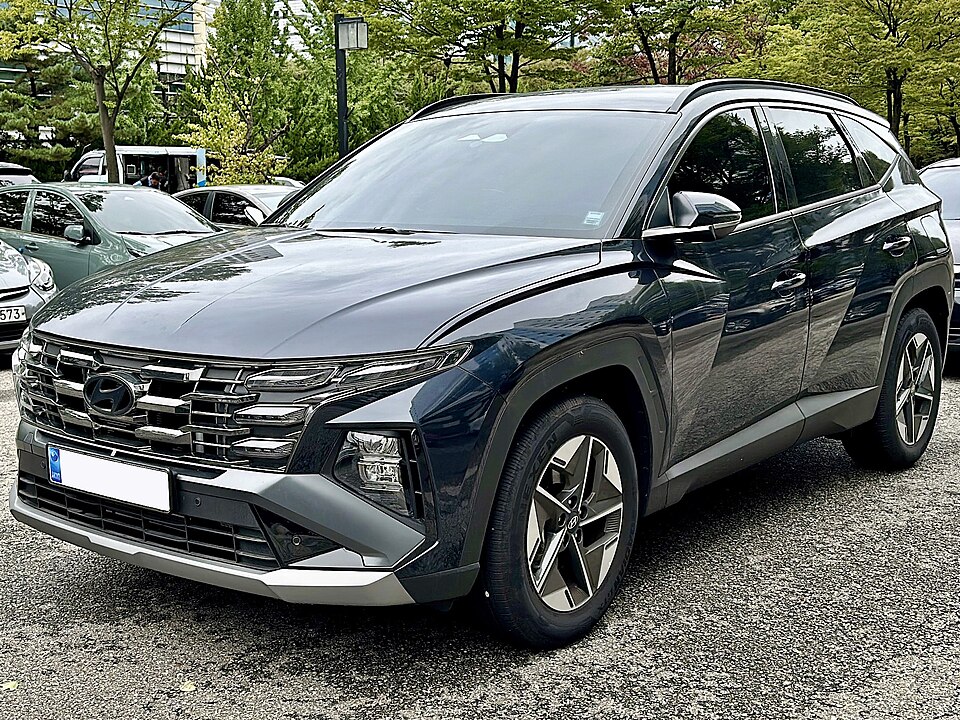
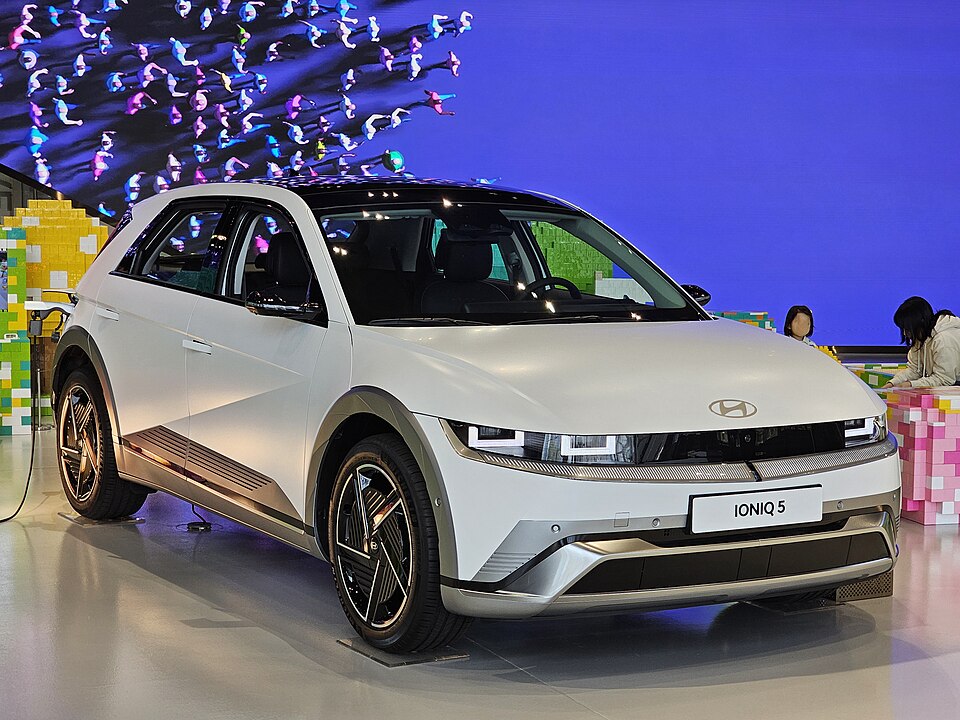
No single automaker sells the exact same model across four powertrains, so this article uses a “close enough” approach. Gasoline, diesel, and hybrid are locked to three trims of the same model — the Hyundai Tucson — while the EV is a separate but comparably sized flagship, the IONIQ 5 Standard 2WD. That’s not a perfectly matched set, and we’re not going to pretend otherwise.
| Powertrain | Model | MSRP | Confidence |
|---|---|---|---|
| Gasoline | Tucson 1.6T Modern 2WD | 28.44M KRW (≈ $20,600) | Solid (manufacturer list price)[1] |
| Diesel | Tucson 2.0 Modern 2WD (MY2025, final list price) | 29.67M KRW (≈ $21,500) | Solid, but discontinuation must be factored in[2] |
| Hybrid | Tucson 1.6T HEV Modern 2WD | 32.75M KRW (≈ $23,700, excise-tax cut applied) | Solid; the tax cut’s expiration is a live issue[3] |
| Electric | IONIQ 5 Standard 2WD | 47.35M KRW (≈ $34,300, before subsidy) | Solid (model-year labeling somewhat fluid)[4] |
The diesel Tucson dropped out of the lineup starting with the 2026 model year. The 2.0-liter diesel trim, sold since 2004, was discontinued after 22 years — leaving only the gasoline turbo and hybrid.[2] So the diesel figures in this article use the “final MY2025 list price.” That’s not a coincidence: it’s part of a broader pattern of diesel passenger SUVs disappearing from Korea’s compact-to-midsize segment, and it lines up neatly with the calculation results below.
_fl_1.jpg)
Subsidies and tax breaks
Korea’s EVs qualify for both a national subsidy and a local (city/province) subsidy. For the 2026 IONIQ 5 Long Range, reporting put the national subsidy at 5.67M KRW plus a Seoul municipal subsidy of 1.70M KRW.[5] (For American readers: this two-tier structure roughly parallels how the U.S. federal EV tax credit under the Inflation Reduction Act can stack with state-level EV incentives — though the mechanics, caps, and eligibility rules differ considerably.) The Standard trim has a smaller battery, so its national subsidy is likely somewhat lower; this article assumes a national subsidy of 4.80M KRW + Seoul’s 1.70M KRW = 6.50M KRW (≈ $4,710) as a center estimate — an assumption, and one that varies a lot by region and trim. That puts the real purchase price at 47.35M − 6.50M = 40.85M KRW (≈ $29,600).
The hybrid gets an individual consumption tax cut (up to 700K KRW, ≈ $510), and the 32.75M KRW price above already has that cut baked in.[3] The cut is locked in through December 31, 2026, but a bill to extend it through 2027 was introduced in Korea’s National Assembly in July 2026 and has not yet passed.[10] In other words, part of the hybrid’s advantage in this calculation rests on a policy variable that’s confirmed for this year and up to the legislature next year.
Fuel/electric efficiency, gas prices, and electricity rates
The Korea Energy Agency’s official Fuel Economy Center publishes the certified combined fuel/electric efficiency figures below.[6]
| Vehicle | Certified efficiency |
|---|---|
| Gasoline 1.6T 2WD | 12.5 km/L (≈ 29.4 mpg) |
| Diesel 2.0 2WD | 14.3 km/L (≈ 33.6 mpg) |
| Hybrid 1.6T 2WD | 16.2 km/L (≈ 38.1 mpg) |
| IONIQ 5 Standard 2WD | 5.1 km/kWh (≈ 3.2 mi/kWh) |
Fuel prices come from Opinet (the Korea National Oil Corporation’s official price-tracking portal — think of it as Korea’s answer to GasBuddy, but government-run) for the Seoul metro area on July 13, 2026: 1,914 KRW/L for gasoline and 1,894 KRW/L for diesel (this is on the higher end of the national range, and the footnote is upfront about that).[7] Converted, that’s roughly $1.39/L for gasoline and $1.37/L for diesel — or about $5.25 and $5.19 per gallon, a number that tends to surprise readers used to gas prices well under $4 a gallon in much of the U.S. EV charging rates vary a lot by operator and time of day — roughly 170–250 KRW/kWh for slow (Level 2-equivalent) charging and 220–350 KRW/kWh for fast (DC fast-charging) — so this article adopts 220 KRW/kWh (≈ $0.16) for slow charging and 320 KRW/kWh (≈ $0.23) for fast charging as center values.[8] The default charging mix is 70% slow / 30% fast, but since that ratio swings the result significantly, the calculator below lets you adjust it directly.
Taxes, insurance, and maintenance
Korea’s vehicle registration tax (under the Local Tax Act) is a flat-rate-by-bracket structure, not a marginal one — unlike income tax, where only the excess above a threshold is taxed at the higher rate, here the entire engine displacement gets multiplied by whichever bracket’s rate it falls into. (The closest U.S. analog is an annual vehicle property/registration tax, though most U.S. states base theirs on vehicle value or a flat fee rather than engine displacement.) Vehicles at or under 1,600cc pay 140 KRW per cc across the full displacement; vehicles over 1,600cc and up to 2,000cc pay 200 KRW per cc; a 30% local education tax surcharge applies on top. EVs pay a flat 100,000 KRW plus the education surcharge.[9]
| Vehicle | Displacement | Annual registration tax |
|---|---|---|
| Gasoline/hybrid (1,598cc) | ~1,600cc | 291K KRW (≈ $210) |
| Diesel (1,995cc) | ~2,000cc | 519K KRW (≈ $375) |
| Electric | — | 130K KRW (≈ $95) |
Korea doesn’t have a clean official statistic for insurance premiums by powertrain, so this article assumes a standard profile (driver in their 40s, maximum accident-free discount tier, full comprehensive coverage including collision) — an assumption. Center values: 980K KRW (≈ $710) for gasoline, 1.00M KRW (≈ $725) for diesel, 960K KRW (≈ $695) for hybrid, and 1.25M KRW (≈ $905, roughly a 25% premium over the internal-combustion vehicles) for electric.[11] For context, U.S. market data has reported EV insurance running about 42% higher than gas vehicles — that’s a U.S. figure, not a Korean one, so it’s included here only as a directional reference, not a substitute for the Korean estimate.[11]
Maintenance is the weakest-sourced variable in this article. No first-party Korean statistics exist for this breakdown, so the figures below combine trade-press reporting and mechanic-shop estimates. Center values: 550K KRW (≈ $400) for gasoline, 600K KRW (≈ $435) for diesel, 450K KRW (≈ $325) for hybrid, and 300K KRW (≈ $220) for electric (no oil changes or other combustion-engine consumables, offset somewhat by faster tire wear from the extra battery weight).[12] The hybrid coming in below gasoline may seem counterintuitive given its extra components, but regenerative braking stretches brake-wear parts far longer, and the engine shutting off at idle and low speed means slower wear on the engine itself (the added power-electronics coolant loop is a long-interval service, so it adds little on an annualized basis). The EV being lowest also holds only for scheduled servicing and consumables — with no oil or spark plugs, its routine maintenance genuinely is the cheapest, but its total cost of upkeep (insurance, tires, and expensive out-of-warranty repairs) can actually run higher. That disadvantage shows up in this article not under maintenance but under the insurance line (1.25M KRW, the highest of the four) and used-market resale value. This is flagged plainly as an “industry-estimate” figure, not a hard statistic.
Used-market resale value
Korean reporting consistently shows steep EV depreciation on the resale market. Domestic EVs have been documented losing 40–53% of their value by year three, versus gasoline vehicles losing only around 30% over the same period.[13] The leading explanation is that expected battery-replacement costs (once the typical 8–10 year battery warranty expires) get priced into used valuations well before the warranty actually runs out. This article extrapolates that trend to the 5-year and 7-year marks, assuming the following residual values (share of original price retained) — an assumption, with the EV split into pessimistic and optimistic tracks.
| Vehicle | 5-yr residual value | 7-yr residual value |
|---|---|---|
| Gasoline | 45% | 30% |
| Diesel | 40% | 25% |
| Hybrid | 52% | 35% |
| EV (pessimistic) | 25% | 18% |
| EV (optimistic) | 40% | 30% |
EV resale value is the single variable that swings this entire calculation the most. That’s why it gets two parallel tracks instead of one point estimate.
Scenario variables
Per Korea’s Ministry of Land, Infrastructure and Transport (via the Korea Transportation Safety Authority), the average vehicle travels 35.2 km/day in 2023 — about 12,850 km/yr (≈ 8,000 mi/yr).[14] This article uses a somewhat rounder, slightly higher 15,000 km/yr (≈ 9,300 mi/yr) as its standard scenario, and 30,000 km/yr (≈ 18,600 mi/yr) — representative of a company car or long-distance commuter — as its heavy-use scenario. Note for U.S. readers: American drivers average closer to 12,000–14,000 miles a year, well above either Korean baseline here — a genuinely different starting assumption if you’re mentally porting this calculation to your own driving habits. Ownership period is 5 years standard, 7 years for the heavy-use/long-hold case.
FORMULA
The skeleton of total cost of ownership
is the purchase price, is subsidies and tax breaks, and is the residual value ratio after years. Resale value is calculated against the original MSRP , not the post-subsidy purchase price, because the used-car market doesn’t care how much subsidy the original buyer got. Fuel cost formulas differ by powertrain:
Here is annual mileage (km). Checking units: — that checks out.
Standard scenario: 15,000 km/yr (≈ 9,300 mi/yr), 5-year hold
Starting with gasoline: fuel cost is 만 (10K KRW)/yr, and annual fixed costs (tax + insurance + maintenance) are 만/yr. Five-year operating costs total 만, and 5-year resale value is 만.
The other three vehicles follow the same method.
| Vehicle | Fuel/yr | Fixed costs/yr | 5-yr operating cost | 5-yr resale value | 5-yr TCO |
|---|---|---|---|---|---|
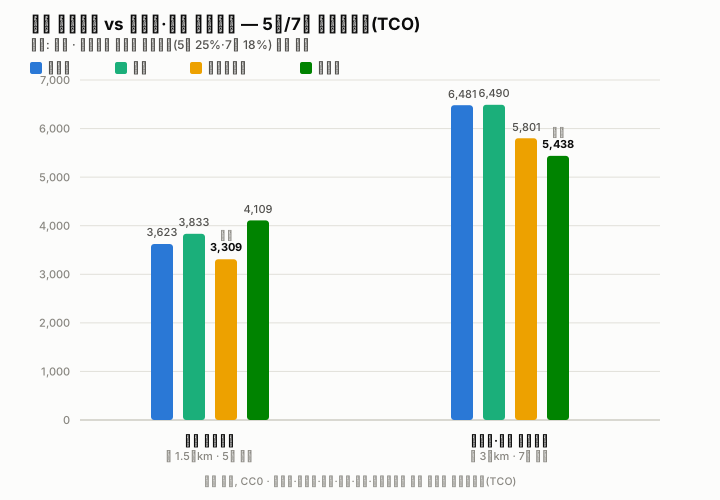
| Gasoline | 229.7만 | 182.1만 | 2,058.9만 | 1,279.8만 | 3,623만 KRW (≈ $26,300) |
| Diesel | 198.7만 | 211.9만 | 2,052.9만 | 1,186.8만 | 3,833만 KRW (≈ $27,800) |
| Hybrid | 177.2만 | 170.1만 | 1,736.6만 | 1,703.0만 | 3,309만 KRW (≈ $24,000) |
| EV (pessimistic) | 73.5만 | 168.0만 | 1,207.6만 | 1,183.8만 | 4,109만 KRW (≈ $29,800) |
(만 = 10,000 KRW throughout these tables; multiply by ≈ $7.25 for a rough dollar figure, or use the bolded USD conversions in the summary rows.)
Standard-scenario ranking: hybrid (3,309) < gasoline (3,623) < diesel (3,833) < EV (4,109). The EV comes in last — its purchase premium and resale uncertainty can’t be clawed back over a short hold with modest mileage. The interesting case is diesel. Its fuel cost alone beats gasoline (198.7만 < 229.7만), yet the higher purchase price and lower residual value swallow that advantage whole, leaving it in third place. Flip the EV to its optimistic resale track (40% at 5 years), though, and its TCO drops to 3,399만 KRW (≈ $24,600) — enough to beat both gasoline and diesel in the standard scenario, second only to the hybrid. One resale assumption moves two rank positions.
Heavy-use, long-hold scenario: 30,000 km/yr (≈ 18,600 mi/yr), 7-year hold
Double the mileage and stretch the hold to seven years, and the picture changes.
| Vehicle | Fuel/yr | Fixed costs/yr | 7-yr operating cost | 7-yr resale value | 7-yr TCO |
|---|---|---|---|---|---|
| Gasoline | 459.4만 | 182.1만 | 4,490.2만 | 853.2만 | 6,481만 KRW (≈ $47,000) |
| Diesel | 397.3만 | 211.9만 | 4,264.7만 | 741.8만 | 6,490만 KRW (≈ $47,050) |
| Hybrid | 354.4만 | 170.1만 | 3,671.8만 | 1,146.3만 | 5,801만 KRW (≈ $42,050) |
| EV (pessimistic) | 147.1만 | 168.0만 | 2,205.4만 | 852.3만 | 5,438만 KRW (≈ $39,400) |
Heavy-use/long-hold ranking: EV (5,438) < hybrid (5,801) < gasoline (6,481) ≈ diesel (6,490). Two reversals happen at once. First, the EV leapfrogs the hybrid into first place — its low running costs and low registration tax, compounded over more miles and more years, more than offset even the pessimistic resale hit. Second, diesel not only fails to win here — it loses, narrowly, even to gasoline (6,490만 vs. 6,481만). Diesel’s much-touted fuel-economy edge gets erased because declining sales and the discontinuation news make diesel’s used-market resale value drop faster than gasoline’s. Diesel doesn’t finish first in either the standard scenario or the heavy-use/long-hold scenario. The old assumption that “diesel is the economical choice” doesn’t hold up under either scenario in this calculation.
Working backward to the break-even point
We can work backward to find exactly where, between the two scenarios, the ranking actually flips. Holding the 5-year ownership period fixed and treating annual mileage as the variable, we can solve for where the EV (pessimistic)'s TCO equals each competitor’s.
| At 5-year hold | Break-even mileage where EV (pessimistic) pulls ahead |
|---|---|
| vs. gasoline | 24,300 km/yr (≈ 15,100 mi/yr) |
| vs. diesel | 21,600 km/yr (≈ 13,400 mi/yr) |
| vs. hybrid | 38,200 km/yr (≈ 23,700 mi/yr) |
Stretch the hold to 7 years and the break-even points drop sharply.
| At 7-year hold | Break-even mileage where EV (pessimistic) pulls ahead |
|---|---|
| vs. gasoline | 15,700 km/yr (≈ 9,760 mi/yr) |
| vs. diesel | 12,000 km/yr (≈ 7,460 mi/yr) |
| vs. hybrid | 22,600 km/yr (≈ 14,000 mi/yr) |
At a 7-year hold, the EV needs just 12,000 km/yr (≈ 7,460 mi/yr) to beat diesel — a lower bar than Korea’s own national average (≈ 12,850 km/yr, or ≈ 8,000 mi/yr).[14] In other words, if you’re planning to keep the car a while, an EV beats a diesel even at perfectly ordinary driving habits. The same thing happens if you hold mileage fixed at the standard 15,000 km/yr but stretch ownership to 10 years instead: 10-year TCO comes out to 6,535만 KRW (≈ $47,400) for gasoline, 6,776만 KRW (≈ $49,100) for diesel, 6,257만 KRW (≈ $45,350) for hybrid — and 6,121만 KRW (≈ $44,400) for the EV (pessimistic), the lowest of all four. The axis that flips the ranking isn’t mileage alone — it’s the full two-dimensional plane of mileage × years held.
Bonus: what happens with present-value discounting
Everything above used nominal totals — treating 1 million KRW paid five years from now as equal in value to 1 million KRW paid today. But today’s million, deposited in a bank, earns interest, so it’s worth slightly more than tomorrow’s million. Present-value discounting (shrinking future amounts by a discount rate to express them in today’s terms) accounts for that time value. The Bank of Korea’s policy rate — Korea’s rough equivalent of the U.S. Federal Reserve’s funds rate — sits at 2.50% as of July 2026,[15] though anyone financing the purchase with a personal loan faces a much higher real cost of capital, often reaching double digits.
Apply a 4% discount rate to the standard scenario and the ranking holds, but the gaps narrow: hybrid 3,421만 KRW (≈ $24,800), gasoline 3,625만 KRW (≈ $26,300), diesel 3,819만 KRW (≈ $27,700), EV 4,187만 KRW (≈ $30,350) — the hybrid-vs-gasoline gap shrinks from 314만 KRW (≈ $2,280) to 204만 KRW (≈ $1,480). Push the rate to 8% (roughly personal-loan territory) and the ranking still holds, with the gap down to just 115만 KRW (≈ $835). But push it to 15% (high-interest credit-card-loan territory) and the ranking actually flips: hybrid 3,593만 KRW (≈ $26,050), gasoline 3,588만 KRW (≈ $26,000) — gasoline takes first place, by a hair.
Here’s why. Hybrids and EVs follow a “pay more up front, get more back later (via resale)” structure. As the discount rate rises, the present value of that future resale payoff shrinks, putting this kind of vehicle at a relative disadvantage. It’s a spot where financial theory and popular intuition collide head-on. Worth stating plainly, though: across the realistic 4–8% discount-rate range, the ranking doesn’t actually flip.
OUTPUT
Plan to trade in after five years, and the hybrid wins outright — 3,309만 KRW (≈ $24,000). Plan to hold for seven-plus years and drive a lot, and the EV wins — 5,438만 KRW (≈ $39,400). Diesel wins neither calculation — and, as of the 2026 model year, you can’t even buy the diesel Tucson anymore. “Diesel is the economical choice” is true on the fuel-economy sticker and false on the receipt.
If this calculation has one variable with more leverage than any other, it’s EV resale value. Look at it pessimistically, and the EV is comfortably last in the standard scenario. Look at it optimistically, and it beats both gasoline and diesel after just five years. The question “should I buy an EV” turns out to hinge less on battery chemistry and more on who can predict a used car’s price three years from now more accurately. The catch is that nobody really can.
.jpg)
References
[1]: CarNoon, “The New Tucson Price List,” https://www.carnoon.co.kr/newcar/vehicle/11609 (accessed 2026-07-14) — Korean-language source. Gasoline 1.6T Modern 2WD listed at 28.44M KRW; certified combined fuel economy 12.5 km/L.
[2]: Autonology, “Hyundai Tucson NX5 Hybrid SUV,” https://autonology.co.kr/newcar/hyundai-tucson-nx5-hybrid-suv-design/ — Korean-language source; states plainly that “the diesel lineup, maintained since the first-generation model in 2004, disappears entirely with the NX5” (a 22-year run ending in discontinuation). CarNoon, “Tucson Diesel 2.0 Price List (MY2025),” https://www.carnoon.co.kr/newcar/vehicle/11609-115314 — final MY2025 Modern 2WD list price of 29.67M KRW (excise-tax cut applied), certified combined fuel economy 14.3 km/L.
[3]: CarNoon, “Tucson Hybrid Price List,” https://www.carnoon.co.kr/newcar/vehicle/11610 — Korean-language source. 1.6T HEV Modern 2WD at 32.75M KRW (individual consumption tax cut applied), certified combined fuel economy 16.2 km/L.
[4]: CarNoon, “IONIQ 5 Price List,” https://www.carnoon.co.kr/newcar/vehicle/11664 — Korean-language source. Standard 2WD at approximately 47.35M KRW (before subsidy), certified combined efficiency 5.1 km/kWh.
[5]: Digital Times, “2026 EV Subsidy Restructuring,” https://www.dt.co.kr/article/12052954 ; TechWorld, https://www.epnc.co.kr/news/articleView.html?idxno=327331 — both Korean-language sources. IONIQ 5 Long Range: national subsidy of 5.67M KRW plus a Seoul municipal subsidy of 1.70M KRW. The Standard trim’s smaller battery likely means a somewhat lower national subsidy; this article assumes 4.80M KRW national + 1.70M KRW Seoul = 6.50M KRW as a working estimate.
[6]: Korea Energy Agency, Fuel Economy Center, https://www.fueleconomy.or.kr — Korean-language source; the origin of Korea’s certified combined fuel/electric-efficiency system (Korea’s rough equivalent of the EPA’s fuel economy testing regime). Individual trim figures are drawn from manufacturer disclosures ([1][3][4]).
[7]: Korea National Oil Corporation, Opinet, “Average Price by Region,” https://www.opinet.co.kr/user/dopospdrg/dopOsPdrgAreaView.do — Korean-language source. As of July 13, 2026, Seoul-area average prices were 1,913.77 KRW/L for gasoline and 1,893.99 KRW/L for automotive diesel (tax included). Seoul runs on the higher end of Opinet’s regional pricing, and the national average on the same date was lower (e.g., Gyeonggi Province gasoline at 1,872.04 KRW/L). This article uses the Seoul figures because it models a Seoul-resident scenario.
[8]: Ministry of Environment, EV Zero-Emission Vehicle Portal charging-rate lookup, https://ev.or.kr/nportal/evcarInfo/initEvcarChargePrice.do ; Korea Electric Power Corporation (KEPCO), EV Charging Rate Plan, https://home.kepco.co.kr/kepco/front/html/CY/E/E/CYEEHP00102.html — both Korean-language sources. Per-kWh rates for shared slow/fast chargers vary widely by operator and time of day (roughly 170–250 KRW for slow, 220–350 KRW for fast); this article adopts 220 KRW (slow) / 320 KRW (fast) as center values.
[9]: Local Tax Act, Article 127, and its Enforcement Decree (vehicle registration tax rates) — Korean-language statute. Flat-rate-by-bracket structure (whichever bracket the displacement falls into applies its rate to the entire displacement — not a marginal/excess-only structure like income tax): 140 KRW per cc for vehicles up to 1,600cc; 200 KRW per cc for vehicles over 1,600cc up to 2,000cc; a flat 100,000 KRW for EVs; plus a 30% local education tax surcharge in all cases.
[10]: Easy-to-Find Everyday Legal Information (Ministry of Government Legislation portal), “Hybrid Vehicle Tax Reduction,” https://easylaw.go.kr/CSP/CnpClsMain.laf?popMenu=ov&csmSeq=1404&ccfNo=3&cciNo=1&cnpClsNo=2 ; Energy Daily, “Bill to Extend Hybrid Excise Tax Cut by One Year Introduced,” 2026-07-09, https://www.energydaily.co.kr/news/articleView.html?idxno=201254 — both Korean-language sources. The current tax cut is confirmed through December 31, 2026; a bill extending it through 2027 is pending in Korea’s National Assembly (unconfirmed).
[11]: General Insurance Association of Korea, Auto Insurance Premium Comparison Disclosure, https://kpub.knia.or.kr/carInsuranceDisc/adjustment/carAdjustmentCompare.do — Korean-language source; an individual-quote lookup system (no official aggregate Korean statistic exists, hence the standard-profile assumption used here). News Penguin, “U.S. EV Insurance Premiums 42% Higher (Insurify, 2026-06-08),” https://www.newspenguin.com/news/articleView.html?idxno=21717 — Korean-language source reporting on U.S. market data; included as directional reference only, not a Korean-market figure.
[12]: TheGuru, “EV Maintenance Costs 20% Higher Than Internal Combustion,” https://theguru.co.kr/news/article.html?no=76499 — Korean-language source; no first-party Korean statistic exists, so this synthesizes trade-press and mechanic-shop estimates. Flagged transparently as this article’s weakest-sourced variable. Note: the “cost” in that headline is total cost of upkeep (insurance, tires, and repairs included), a different category from the “maintenance” in our table (scheduled servicing and consumables). Scheduled maintenance itself is lower for the EV; the EV’s disadvantage in total upkeep is captured in this article under the insurance and resale-value lines instead.
[13]: Encar Media, https://www.encar.com/mg/post.do?method=view&pagetype=news&subid=theme1&postid=148676 ; Herald Business, https://biz.heraldcorp.com/article/10763241 — both Korean-language sources. Korean EVs depreciate 40–53% by year three (versus gasoline vehicles in the 30%-plus range over the same period); the primary cause cited is the pre-pricing of expected battery-replacement costs once the battery warranty period ends.
[14]: Korea Transportation Safety Authority (TS), Vehicle Mileage Statistics, https://www.data.go.kr/data/15088454/fileData.do — Korean-language government dataset. 2023 average daily mileage per vehicle: 35.2 km (roughly 12,850 km/yr, ≈ 8,000 mi/yr).
[15]: Bank of Korea, Base Rate History, https://www.bok.or.kr/portal/singl/baseRate/list.do?dataSeCd=01&menuNo=200643 — Korean-language source. Base rate held at 2.50% as of July 2026 (eighth consecutive hold) — Korea’s rough equivalent of the U.S. Federal Reserve’s policy rate.