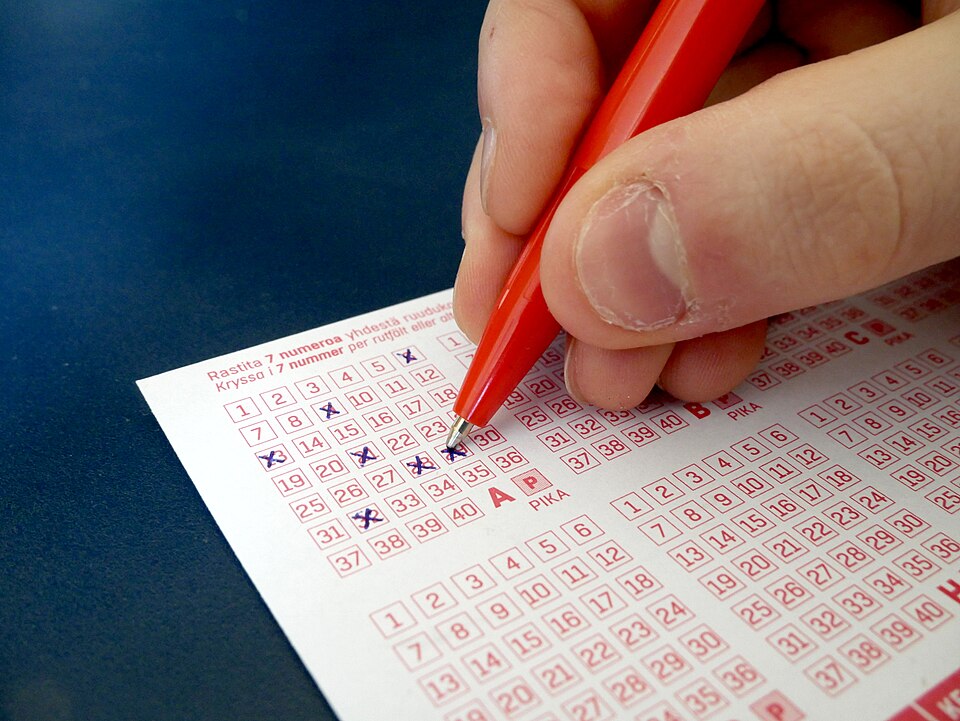
It’s Saturday night, just after 9 p.m. One person stands in line outside a convenience store, five marking sheets in hand, agonizing over which numbers to pick. “Why not just buy every combination?” a friend jokes. Run the math, and it turns out that joke has a real answer.
This article is a mathematical thought experiment and does not encourage the purchase of lottery tickets.
INPUT
Variable 1: Total Korean Lotto Combinations
Korea’s Lotto 6/45 asks players to choose 6 numbers from 1 to 45. The number of possible combinations is exactly 8,145,060.[1] This is fixed by the rules of the game — no ambiguity.
Variable 2: Price per Game
Per Dhlottery (동행복권, the official Korean lottery operator) rules, one game costs ₩1,000 — about $0.74 at an exchange rate of ₩1,350/USD (2024 annual average)[6] — and the price has not changed since the Lotto launched in 2002.[1]
Variable 3: Total Cost to Buy Every Combination
Approximately ₩8.145 billion (about US$6.0 million as of 2024). This is the baseline cost for the entire calculation.
Variable 4: Prize Return Rate
Under Article 14 of the Enforcement Decree of the Lottery and Lottery Fund Act, 50% of total ticket sales revenue is returned as prize money.[2] The remaining 50% funds the Lottery Fund (public benefit projects) and operating costs. As long as this 50% ceiling holds, no combination of ticket buyers — however cleverly they coordinate — can collectively expect to recover more than 50 cents per dollar spent. It’s the same structural constraint as US state lotteries, which typically return about 50% of revenue as prizes.
Variable 5: Total Draw Sales
This represents a typical draw without accumulated unclaimed prizes.[3] Draws with large carryover accumulations (some draws after draw #1,100) occasionally exceed ₩20 billion in sales — but this calculation uses a standard draw as its central estimate.
Variable 6: Prize Tier Distribution
| Tier | Condition | Distribution |
|---|---|---|
| 1st | All 6 numbers match | 75% of prize pool ÷ number of 1st-prize winners |
| 2nd | 5 numbers + bonus number match | 12.5% of prize pool ÷ number of 2nd-prize winners |
| 3rd | 5 numbers match (bonus does not) | ₩1,500,000 flat (~US$1,110) |
| 4th | 4 numbers match | ₩50,000 flat (~US$37) |
| 5th | 3 numbers match | ₩5,000 flat (~US$3.70) |
Per official Dhlottery distribution rules.[1] Tiers 3–5 pay flat amounts per winning ticket regardless of winner count. The prize pool equals .
One structural difference that matters for this calculation: unlike Powerball, where unclaimed jackpots roll over to the next draw, the Korean Lotto’s 1st-prize pool does not roll over. Only a separate 12.5% “reserve” slice accumulates into future draws. This means you cannot engineer a scenario where the Korean Lotto jackpot is arbitrarily large — the jackpot is bounded by a single draw’s sales.
Variable 7: Number of 2nd-Prize Winners (The Key Sensitivity Variable)
Dhlottery’s published historical draw statistics show that 2nd-prize winner counts vary considerably from draw to draw. Because many players use Quick Pick (auto-generated random selections), popular number combinations can appear on dozens or even more than a hundred independent tickets in a single draw.[3] This calculation uses three scenarios for : 1 (monopoly), 60 (central estimate), 80 (conservative estimate).
Variable 8: Powerball Base Figures
| Symbol | Value | Source |
|---|---|---|
| 292,201,338 | Official Powerball combination count | |
| $2 | Price per Powerball ticket | |
| 0.60 | Cash lump-sum as share of advertised jackpot | |
| 0.37 | US federal top marginal income tax rate |
Powerball requires matching 5 white balls (1–69) and 1 Powerball (1–26).[4] Total combinations: .
FORMULA
Step 1: Count Winning Tickets by Prize Tier
If you hold all 8,145,060 tickets, how many tickets land in each prize tier? The critical detail: Korean Lotto draws one extra bonus number alongside the 6 main winning numbers. Matching 5 of the 6 main numbers plus the bonus — but not all 6 main numbers — wins 2nd prize.
1st Prize (all 6 numbers match):
There is exactly one combination that matches all 6 winning numbers.
2nd Prize (5 main numbers + bonus number):
There are ways to choose which 5 of the 6 winning numbers appear on the ticket, and the remaining number must be exactly the bonus number.
3rd Prize (5 numbers match, bonus does not):
Five winning numbers are matched (6 ways to choose which five), and the remaining number must be neither a winning number nor the bonus number. That leaves valid choices.
4th Prize (4 numbers match):
Choose 4 of the 6 winning numbers (), then fill the remaining 2 slots from the 39 numbers that are not among the 6 winning numbers (the bonus number is counted among these 39): . Since 4th prize only requires 4 matches, having the bonus number in a remaining slot does not upgrade the ticket to 2nd prize.
5th Prize (3 numbers match):
, .
Verification — total winning tickets:
Of the 8,145,060 tickets, 194,130 (about 2.38%) win a prize. The remaining 7,950,930 are blanks.
Step 2: Fixed Prize Recovery from Tiers 3–5
Tiers 3–5 pay flat amounts per winning ticket regardless of how many other players also won. Total fixed prize recovery from owning every combination:
Against the ₩8.145 billion (~US$6.0M) cost, the guaranteed fixed-tier recovery is only ₩1.812 billion (~US$1.34M). Before the jackpot is even counted, you are already more than ₩6.3 billion (~US$4.7M) in the red.
Step 3: Prize Pool Calculation
From this pool: 75% goes to 1st prize, 12.5% to 2nd prize, and 12.5% is reserved for the accumulation pool that rolls into future draws’ 1st-prize funds.[1] Since the reserve portion belongs to a future draw, we focus only on the 1st- and 2nd-prize shares here.
Step 4: Jackpot Sweep + 2nd-Prize Sharing → Net Profit/Loss
Holding every combination guarantees you the sole 1st-prize winner (). But 2nd prize can still be shared. Even though you hold all six of the possible 2nd-prize combinations, another player who independently chose the same 5-number + bonus combination splits the 2nd-prize pool with you.
Total prize recovery formula:
Net profit/loss:
This equation reveals the structural problem. Even if you are the only person who holds a 2nd-prize combination (, the theoretical best case), the maximum 2nd-prize contribution is ₩687.5 million (~US$509K). That still leaves a loss of KRW.
Net profit/loss by scenario (based on = ₩11B ≈ US$8.1M):
| Scenario | 1st Prize | 2nd Prize | Tiers 3–5 | Total Recovery | Net P/L |
|---|---|---|---|---|---|
| (monopoly) | ₩4.125B | ₩687.5M | ₩1.812B | ₩6.625B (~US$4.9M) | −₩1.52B (~−US$1.13M) |
| (central) | ₩4.125B | ₩11.5M | ₩1.812B | ₩5.949B (~US$4.4M) | −₩2.196B (~−US$1.63M) |
| (conservative) | ₩4.125B | ₩8.6M | ₩1.812B | ₩5.946B (~US$4.4M) | −₩2.199B (~−US$1.63M) |
In a typical draw, even a complete jackpot and 2nd-prize sweep produces a loss of at least ₩1.5 billion (~US$1.1M).
Step 4.5: Break-Even Sales Volume
What total draw sales volume would make this theoretically profitable? Solving for break-even under the best-case assumption:
Total sales would need to exceed approximately ₩14.5 billion — and you’d still need to be the sole 2nd-prize winner. That’s roughly 1.32 times a typical draw’s sales volume, only achievable in draws where prize accumulation has built up across multiple consecutive rounds.[3]
Step 4.6: What If You Only Buy Half? — Trading Certain Loss for a High-Variance Gamble
When ₩8.1 billion is out of reach, the natural next question is: “What if I buy half?” Purchase of all 8,145,060 combinations — 4,072,530 games chosen at random — and the probability that you hold the jackpot combination is exactly .
Let purchase fraction be . Cost:
Tier 3–5 recovery is nearly deterministic. The winning ticket counts for tiers 3–5 (228, 11,115, and 182,780 respectively) are large enough that a binomial distribution over converges tightly: holding a random fraction of all combinations returns almost exactly of those prizes. Variance is negligible relative to the mean.
2nd-prize expected recovery also scales linearly with . Unlike a full buy-in, where you hold all six possible 2nd-prize combinations, buying fraction means you hold an average of of them. The expected share of the 2nd-prize pool is:
This is rounding-error territory — it changes nothing material.
1st prize is binary. Among all 8,145,060 combinations, exactly one matches the jackpot numbers. You hold it with probability ; you don’t with probability . The outcome splits into two branches:
Substituting , , :
Scenario summary (, , ):
| Outcome | Probability | Total recovery | Net P/L |
|---|---|---|---|
| Jackpot hit | 50% | ≈ ₩50.4B | +₩9.6B (~+US$0.71M) |
| Jackpot miss | 50% | ≈ ₩9.1B | −₩31.6B (~−US$2.34M) |
Expected net profit/loss:
This is exactly half the full buy-in expected loss of −₩21.96B. In general, expected net profit scales linearly with :
The 50:50 split is deceptive. The two outcomes are not symmetric in magnitude. When you win, you gain ₩9.6B. When you lose, you lose ₩31.6B — a ratio of about 1:3.3. You’re flipping a coin where heads wins a dollar and tails loses three.
You cannot break even on lower tiers alone. If the jackpot misses, total recovery is about ₩9.1B — only 22% of the ₩40.7B spent. Buying half still requires hitting the jackpot to avoid a loss.
General condition: at what fraction does hitting the jackpot still break even? Setting net P/L on jackpot hit to zero and solving for :
Approximating :
Above 65%, even hitting the jackpot loses money. For , the 1st-prize payout combined with all lower-tier recovery still falls short of the total purchase cost.
Caveat: Like the full buy-in analysis in Step 4, this calculation assumes you are the sole 1st-prize winner (). If another ticket-holder also matches the jackpot numbers, gets split and the profit margin shrinks or disappears entirely.
Step 5: Powerball — Break-Even Jackpot Calculation
US Powerball’s rollover jackpot structure — where unclaimed prizes accumulate across draws indefinitely — means jackpots can grow into the billions of dollars. What’s the minimum advertised jackpot that makes a complete Powerball buy-in worthwhile?
Total buy-in cost:
After-tax lump-sum payout (for advertised jackpot ):
Taking the cash lump sum instead of the 30-year annuity means receiving about 60% of the advertised jackpot. The IRS then applies the top federal income tax rate of 37% to that amount.[5] The 60% cash-value ratio is a commonly cited upper-bound; actual figures typically range from 55–60% depending on prevailing interest rates at the time of the draw.
Break-even jackpot:
The advertised jackpot must exceed approximately $1.55 billion for the after-tax lump-sum payout to cover the cost of buying every combination.
The all-time record Powerball jackpot was $2.04 billion on November 2, 2022.[7] Plugging that in:
Assuming sole winner, the theoretical profit is about $187 million. That specific jackpot threshold has been reached exactly once in Powerball history.
Step 6: Physical Feasibility — A Fermi Estimate
Say you have the ₩8.145 billion (~US$6.0M) in hand. Can you actually purchase 8.145 million tickets within one week before the draw?
Offline purchase cap: Dhlottery regulations limit individual in-store purchases to ₩100,000 (100 games) per visit.[8] This is an explicitly anti-syndicate regulation — the same type of rule that US states and Australia introduced after the Stefan Mandel incident (detailed below).
Marking sheets: Each sheet holds up to 5 games. Total sheets needed:
Marking sheets can be filled out in advance. But as a sense-of-scale figure: at 60 seconds per sheet, completing all of them takes — roughly 1,132 days of uninterrupted manual labor. With 10 people working simultaneously, that drops to 113 days.
The actual bottleneck — terminal throughput: Even with every sheet pre-filled, each one must be processed at a lottery terminal during the sales week. Lottery dispensing terminals handle approximately one sheet (up to 5 games) per 15 seconds.[9]
A single terminal would take 283 days. With lottery sales running Monday through Saturday at 8 hours per day:
You would need 141 lottery terminals running flat out for six consecutive days. Korea has approximately 6,500 licensed Dhlottery retail locations, so the terminal count alone is not the problem — coordinating 141 retailers, delivering 1.6 million pre-filled sheets to them, and monopolizing their terminals for the entire sales window is.
Extending each day’s operating hours to 12 hours reduces the required terminal count to about 94, but the logistical challenge is unchanged.
Online purchases are essentially impossible: Dhlottery’s online platform caps each individual at ₩5,000 (5 games) per draw.[8] To purchase all 8,145,060 combinations online, you would theoretically need 1,629,012 separate user accounts.
Historical precedent — Stefan Mandel’s Virginia Syndicate: Romanian mathematician Stefan Mandel organized a large-scale syndicate that purchased the vast majority of combinations in the 1992 Virginia State Lottery and collected a $27 million jackpot.[10] The regulatory response was swift: Virginia and many other US states, Australia, and other jurisdictions quickly introduced rules explicitly blocking this approach. Korea’s per-visit ₩100,000 purchase cap is a direct descendent of exactly these countermeasures.

OUTPUT
Buying every Korean Lotto combination costs about ₩8.145 billion (roughly US$6 million). Under any realistic draw scenario, you recover less than you spend. Sweeping both the jackpot and 2nd prize — the theoretical best case — still leaves you down more than ₩1.5 billion (~US$1.1M) in a standard draw. Breaking even requires an unusually large draw (total sales above ~₩14.5B) and the statistically improbable condition that no one else picks the same 5+bonus combination. Executing the purchase itself requires 141 lottery terminals running six straight days.
Powerball tells a marginally different story. The all-time record $2.04 billion jackpot (November 2022) would, on paper, net you about $187 million after the buy-in — assuming you’re the sole winner. That jackpot level has been reached exactly once in Powerball history.
Buying half — the “gamble on the jackpot” strategy — looks like a coin flip but isn’t a fair one. Spending roughly ₩40.7 billion (~US$3.0M) gives you a 50% shot at netting +₩9.6B (~+US$0.71M), and a 50% shot at losing −₩31.6B (~−US$2.34M). That’s a coin where heads wins a dollar and tails loses three. The expected loss is about ₩11B (~US$0.81M) — exactly half the full buy-in loss, as the math demands.
A lottery is a losing proposition by design. Owning every ticket doesn’t change that — it just makes the loss immediate, certain, and denominated in the tens of millions. The only distinction between buying one ticket and buying all of them is that the latter costs you US$6 million to arrive at the same conclusion.
References
[1]: Dhlottery (동행복권), “Lotto 6/45 Prize Guide and Sales Regulations”, https://www.dhlottery.co.kr/gameInfo.do?method=lotto645
[2]: Ministry of Economy and Finance (기획재정부), “Enforcement Decree of the Lottery and Lottery Fund Act, Article 14 (Prize Distribution)”, Korea Ministry of Government Legislation, https://www.law.go.kr/lsSc.do?section=&menuId=1&subMenuId=15&tabMenuId=81&eventGubun=060101&query=복권+시행령
[3]: Dhlottery (동행복권), “Draw-by-Draw Sales Records and Prize Statistics”, https://www.dhlottery.co.kr/gameResult.do?method=allWin
[4]: Powerball, “How to Play Powerball”, Multi-State Lottery Association (MUSL), https://www.powerball.com/powerball/pb_howtoplay.asp
[5]: Internal Revenue Service (IRS), “Topic No. 419 Gambling Income and Losses”, https://www.irs.gov/taxtopics/tc419
[6]: Bank of Korea (한국은행), “KRW/USD Exchange Rate Reference (2024 annual average approximately ₩1,350/USD)”, ECOS Economic Statistics System, https://ecos.bok.or.kr/
[7]: Powerball, “Powerball Jackpot History — $2.04 Billion (November 2, 2022, California)”, https://www.powerball.com/powerball/pb_jackpothist.asp
[8]: Dhlottery (동행복권), “Lottery Purchase Limits — Offline: ₩100,000 per visit; Online: ₩5,000 per draw per person”, https://www.dhlottery.co.kr/userSsl.do?method=memberMain
[9]: Terminal processing speed (approximately 15 seconds per sheet of up to 5 games) is estimated from retailer operation reports and press coverage of lottery terminal equipment. Actual speed varies by terminal model and network conditions; a plausible range is 5–20 seconds per sheet.
[10]: Stefan Mandel syndicate — Associated Press, “Man Who Won Lottery 14 Times Explains How He Did It”, 1992; also Rob Haskell, “The Man Who Cracked the Lottery”, The Wall Street Journal, 2019. Following this incident, Virginia and numerous other US states, as well as Australia, introduced regulations explicitly prohibiting bulk syndicate-style purchases.